Commercial Tree Services: What Businesses Need to Know
A practical guide to commercial tree service: liability, scheduled maintenance, parking lot trees, and choosing a reliable partner.
Key takeaways
- A commercial tree service manages liability by documenting inspections and removing hazards before they fail, which supports your defense if a tree causes injury or property damage.
- Scheduled trimming and removal programs cost less over time than reactive emergency calls and keep sightlines, signage, and walkways clear.
- Trees in parking lots and along walkways need pruning for clearance, root management near pavement, and regular checks for deadwood over people and cars.
- Well-maintained tree canopy adds measurable value to commercial property and signals a cared-for site to customers and tenants.
- Verify a commercial tree partner's insurance, ISA certification, and ANSI A300 compliance before any crew sets foot on your property.
A commercial tree service keeps the trees on your property healthy, safe, and clear of buildings, parking, and power lines so your business avoids injury claims and unexpected damage. For Tennessee businesses, the right provider handles liability, scheduled maintenance, and storm response as part of one plan, not a scramble after something falls.
This guide walks through what matters when you hire a commercial tree service: why maintenance protects your bottom line, how liability works on business property, what a scheduled program looks like, and how to choose a partner you can trust with a high-traffic site.
Why Business Tree Maintenance Matters
Trees on a commercial property do real work. They shade parking, soften hardscape, and make a site feel established and well run. That curb appeal is not just cosmetic. Research published in the International Society of Arboriculture's journal found that a 1% increase in both canopy measures was associated with a combined 3% increase in house price, or $7,298 for an average-priced home in the study region (Arboriculture & Urban Forestry). Commercial buyers and tenants read a cared-for landscape the same way: a sign that the whole property is managed well.
Neglect runs the other direction. Overgrown limbs block signage and lighting. Roots lift sidewalks and crack asphalt. Deadwood over a parking stall becomes a claim waiting to happen. A maintenance program catches these problems while they are small and cheap to fix.
Liability and Safety on Commercial Properties
The legal stakes are higher on a business site than at a home. When customers, tenants, and employees move through your property every day, a failing tree is a premises-liability problem. In most states a property owner can be held responsible for tree-related damage or injury if they knew, or reasonably should have known, about a hazardous condition and did nothing about it (North Carolina State Extension).
That standard is why documentation matters. A professional arborist who inspects your trees on a schedule, notes defects, and recommends corrective work creates a paper trail showing you acted reasonably. If a limb still fails despite your care, that record is part of your defense.
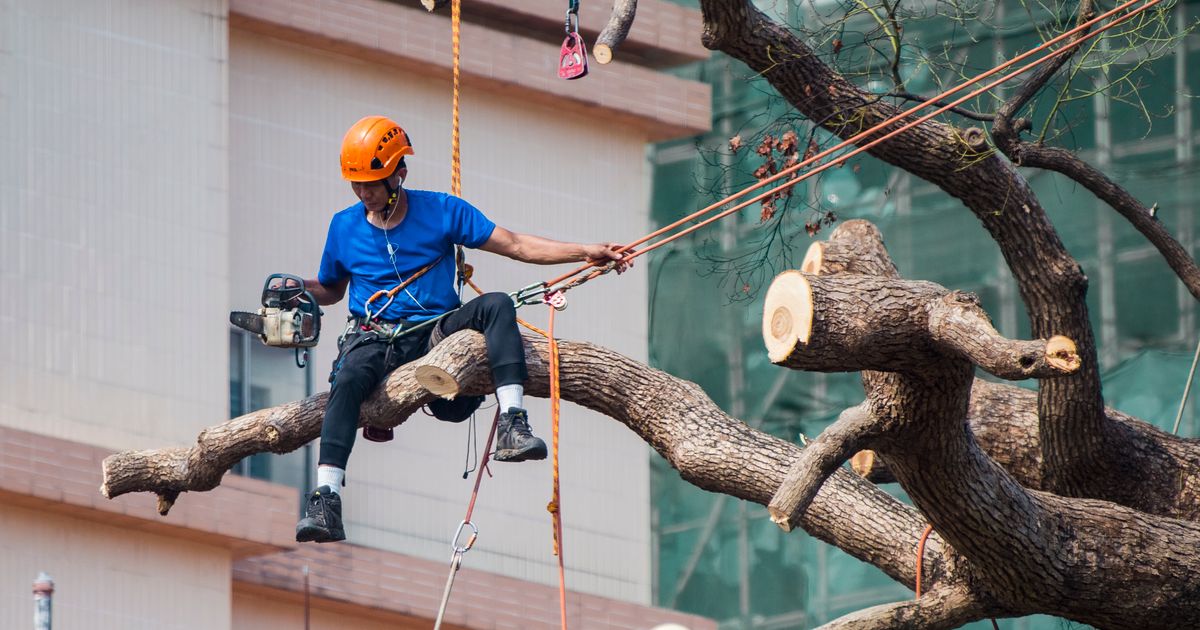
Safety during the work itself is just as important. Tree care is among the more dangerous trades, and inexperience is the main driver of serious incidents. A study of fatal tree care injuries found that 66% of fatal incidents involved workers who had been on the job for one year or less, with electrocution from power lines and falls from trees among the leading causes (NIOSH/CDC FACE study). When you hire a crew to work on your property, their training and insurance protect you from being pulled into an accident on your site.
Scheduled Trimming and Removal Programs
The difference between a healthy commercial landscape and a liability is a plan. A scheduled program sets a regular cadence for inspection, trimming, and removal so trees never drift into a hazardous state.
A typical program includes:
- Annual or twice-yearly inspection by a qualified arborist to flag deadwood, disease, and structural defects.
- Routine pruning to maintain clearance over walkways, drive lanes, and rooflines, and to remove weak or crossing branches before they fail.
- Planned removal of trees that are dead, dying, or too close to structures, done on your timeline instead of after a failure.
- Post-storm checks to catch hanging limbs and leaning trees before they drop.
Timing matters in Tennessee. Pruning during the right seasonal window keeps trees healthier and reduces stress. A scheduled contract folds that timing in automatically, so you are not left deciding month to month.
Reactive service costs more. An emergency removal after a limb drops on a car runs higher than the routine pruning that would have prevented it, and it happens on the storm's schedule, not yours. Dead trees are a frequent culprit, and waiting rarely makes the problem cheaper or safer.
Managing Trees in Parking Lots and Walkways
Parking lots and walkways concentrate risk because they concentrate people and vehicles. The trees there need specific attention.
Clearance pruning keeps canopies high enough for delivery trucks, clear of light poles, and off building facades. Low limbs over a drive lane or a loading zone are a daily hazard.
Root management protects your pavement. Large roots lift and crack asphalt and concrete, which creates trip hazards on walkways and potholes in lots. Choosing the right species for island planters and managing roots early prevents expensive repaving later.
Deadwood removal over parking stalls and sidewalks is non-negotiable. A dead branch over a customer's car or a pedestrian path is exactly the kind of known hazard that drives liability.
When a lot tree finally has to come out, grinding the stump below grade keeps the surface safe and usable. Stump grinding is usually the right call for paved commercial areas because it clears the obstruction without tearing up surrounding pavement.
Emergency Response for Commercial Sites
Storms do not wait for business hours, and Tennessee gets its share of severe weather. When a tree comes down across an entrance, a parking row, or a storefront, the clock starts immediately. You need the site made safe, access restored, and debris cleared so you can reopen.
A good commercial partner offers emergency response as part of the relationship, which matters because a crew that already knows your property can respond faster and more safely. They know which trees were already flagged, where the power lines run, and how your site is laid out. A leaning tree, a cracked trunk, or a large limb hanging over an occupied area all signal that you should call for help quickly rather than wait.
Preparation reduces how often you need that emergency number. Trees that are structurally sound, properly pruned, and free of dead limbs are far less likely to fail in wind. Proactive maintenance is the cheapest storm insurance a property can carry.
Choosing a Reliable Commercial Tree Partner
Not every tree company is built for commercial work. A business site demands more insurance, more coordination, and tighter standards than a backyard job. Before you sign anything, confirm the basics.
Insurance. Require current proof of general liability and workers' compensation coverage. If an uninsured worker is hurt on your property, you can be on the hook.
Credentials. Look for ISA Certified Arborists on staff. Certification means someone on the crew understands tree biology, defect assessment, and proper pruning, not just how to run a saw.
Standards. Ask whether crews follow ANSI A300 pruning standards and OSHA safety practices. These are the industry benchmarks for doing the work correctly and safely.
References and local experience. A provider that already services commercial sites in your area understands Tennessee's trees, soils, and storm patterns. Ask for references from other commercial clients and confirm the company has handled sites similar to yours.
JD Tree Service provides tree removal, trimming, stump grinding, and emergency response to commercial and residential customers across Tennessee, and builds scheduled maintenance programs around how your property actually operates. That combination of planned care and on-call response is what keeps a commercial site safe year round.
The practical next step is simple: schedule a professional inspection of the trees on your property this season. A qualified arborist can tell you which trees need attention now, which can wait, and what a sensible maintenance schedule looks like for your site. That one visit turns tree care from a reactive expense into a managed, predictable part of running your business.